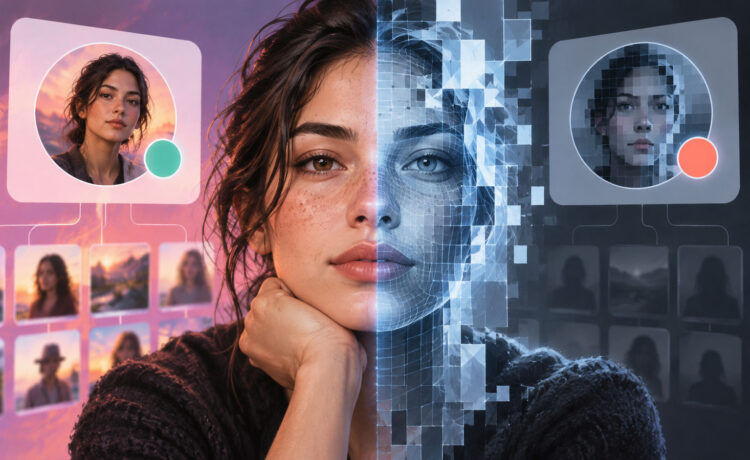
The social-media question “Is this person real?” used to sound like a niche internet detective exercise. Instagram is treating it as a product problem. The platform announced in August that it would rename its AI creator label to “AI-generated profile” and limit the reach of accounts featuring AI-generated people when those accounts do not disclose what they are.
What happened
TechCrunch reports that Instagram’s new policy targets profiles where the person represented is generated or substantially created with AI. Accounts that use the disclosure label are not automatically penalized for being AI-generated, while undisclosed profiles can face reduced reach.
The rule is narrower than a general AI-content policy. Instagram says ordinary AI-assisted editing, caption polishing, graphics and similar creative changes do not require the profile label. The focus is the identity represented by the account.
Why it matters
That distinction matters because AI-generated people occupy a different cultural category from AI-assisted photographs. An editor using AI to remove an object from a picture is still presenting a real-world identity. A fully synthetic influencer can look like a real person while having no human subject behind the image.
Platforms have an incentive to clarify that difference because users make decisions based on perceived authenticity. They may follow, message, buy from or trust an account because they believe a person exists behind it. Once synthetic identities become common, the platform has to provide a basic vocabulary for disclosure.
The reach penalty also changes the economics. A label is no longer just a note for careful readers. It becomes part of the recommendation system’s treatment of an account, which means creators have to consider disclosure as a distribution issue as well as a transparency issue.
The policy also hints at a broader future for platform design. Users may eventually encounter more labels describing not only whether media is synthetic, but how much of an account’s identity is synthetic. That could include generated personalities, automated posting or heavily AI-mediated interactions. The challenge will be keeping those signals understandable enough that ordinary users can make sense of them without becoming full-time platform-policy readers.
The policy will also be watched for consistency. If users see similar-looking synthetic accounts treated differently depending on disclosure, the label could become part of the platform’s trust architecture. If enforcement is uneven, however, the label may become another piece of interface noise that people learn to ignore. The cultural impact will depend as much on implementation as on the wording of the policy.
The PopCultCanvas take
The larger story is not that Instagram has discovered AI people. It is that identity itself is becoming a platform setting. The next generation of social literacy may require users to understand not just whether a photo was edited, but what kind of “person” the account is actually presenting.
Sources checked