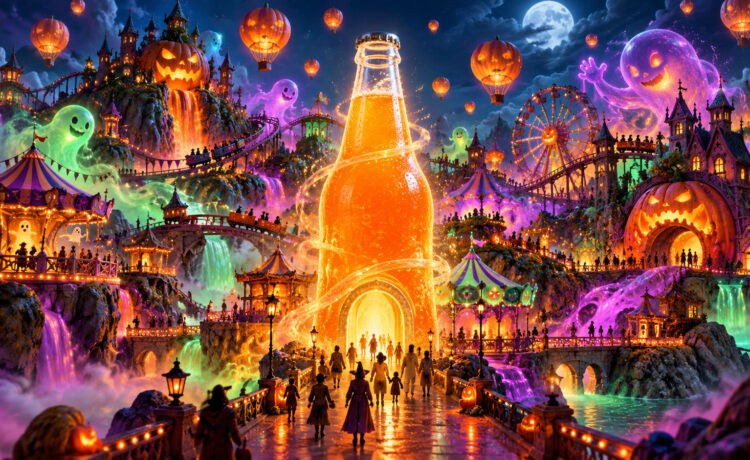
For a long time, seasonal brand marketing meant changing the packaging and adding a limited-time flavour. Fanta is asking a much bigger question: what if Halloween itself became a franchise?
What happened
Coca-Cola introduced Fanta’s Haunted Universe as an original Halloween entertainment world built around four new characters inspired by classic horror archetypes. The Coca-Cola Company says the project was developed with entertainment studio GRAiL and is intended to extend beyond a single campaign.
The strategy later expanded with Ghost Face entering the universe as a licensed horror icon, alongside a limited-edition flavour and collectible packaging. Coca-Cola Canada describes the collaboration as the first time a horror icon has joined Fanta’s original Halloween world.
Why it matters
The move reflects a larger shift in brand marketing. Companies increasingly want audiences to interact with brands through stories, characters and communities rather than only advertisements. A fictional universe can live across packaging, video, social content, experiences and collectibles.
It also borrows from the logic of fashion drops and entertainment franchises. Instead of asking consumers to notice one campaign, the brand creates an ongoing world with new chapters. That can make seasonal marketing feel less disposable and give the brand a recognizable visual language.
The challenge is that original intellectual property is valuable only if audiences care about it. A brand cannot simply announce that characters are important and expect fandom to appear. They need memorable personalities, visual consistency and reasons for people to return. Ghost Face provides instant recognition while the original characters give Fanta something it can own.
The strategy also borrows from entertainment companies that have spent decades building recurring worlds. Once a brand owns characters and lore, it can extend a seasonal campaign into packaging, video, retail experiences and social content without starting from zero each year. That creates an asset that can potentially appreciate with repetition.
But fandom cannot be manufactured by frequency alone. The characters have to be memorable enough to survive outside the advertisement. That is why the Ghost Face collaboration is useful: it supplies an instant cultural reference while Fanta tests whether its own creations can stand beside established horror iconography.
The PopCultCanvas take
Fanta is making a surprisingly serious bet on Halloween as cultural territory. The company is not merely borrowing horror’s popularity; it is trying to own a small piece of the season.
That is clever because Halloween already has built-in rituals. Costumes, parties, horror movies, themed food and collectible packaging all give a fictional universe places to live. The challenge is maintaining enough creativity that the project feels like entertainment rather than a very long commercial.
The Ghost Face partnership is particularly revealing. It shows that original brand characters and established pop-culture icons can coexist in the same ecosystem, giving Fanta both proprietary mythology and instant recognition.
What to watch next
Watch whether Fanta returns to the same universe next Halloween and whether its original characters become recognizable independently of the product. That will tell us whether this is a campaign or the beginning of genuine brand IP.
Sources checked