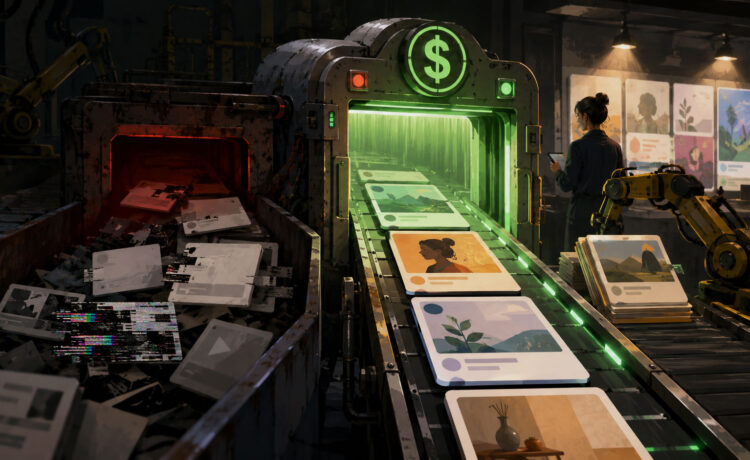
The AI-content debate often sounds abstract until money enters the room. Then suddenly everyone pays attention. YouTube’s recent clarification around AI slop and inauthentic content is important not because it solves the problem, but because it shows where platforms may actually have leverage: monetization. If low-effort synthetic content stops earning, the feed changes faster than any lecture about authenticity could manage.
What happened
TechCrunch reported that YouTube clarified policies around AI slop and upsetting videos, including how inauthentic content can affect monetization. YouTube has also been rolling out AI labels and internal signals to identify realistic AI-generated content, with the company saying it can automatically apply labels when creators fail to disclose significant photorealistic AI use.
The Verge has been tracking the broader frustration around AI-filled feeds, including the gap between labeling AI content and giving users meaningful control over how much of it they see. Together, these updates point to an internet trying to move from “is this AI?” toward “what should happen when it is?”
Why it matters
Media literacy used to mean teaching people how to evaluate sources, check context and spot manipulation. That still matters. But in feed culture, literacy also depends on platform design. If users cannot filter content, if labels are inconsistent, or if low-quality synthetic clips are financially rewarded, the burden falls too heavily on the audience.
Monetization rules create a different kind of pressure. A creator may ignore best-practice language, but they are less likely to ignore a policy that affects revenue. That does not mean every AI-assisted video is bad. Plenty of creators use AI as a legitimate production tool. The issue is the flood of repetitive, low-effort, misleading or emotionally manipulative content designed to farm attention at scale.
The PopCultCanvas take
The phrase “AI slop” is blunt, but useful. It captures the exhaustion of scrolling through content that feels assembled rather than made. The challenge is that platforms have to distinguish between cheap spam and genuine creative experimentation without punishing creators who use tools responsibly.
YouTube’s monetization approach is one practical lever, but it is not enough on its own. Labels help. Revenue rules help. User controls would help even more. The ideal future is not an internet where all AI content is hidden or shamed. It is an internet where people can tell what they are watching, choose how much synthetic media they want, and trust that bad actors are not being rewarded for flooding the zone.
What to watch next
Watch whether other platforms follow monetization-first enforcement or stick mostly to labels. The next major culture fight may be less about whether AI content exists and more about who gets paid for filling the feed with it.
Sources checked: TechCrunch, YouTube Blog, The Verge.