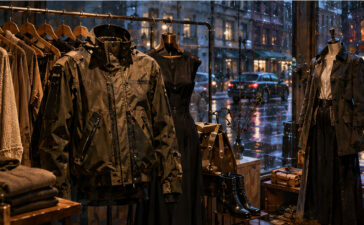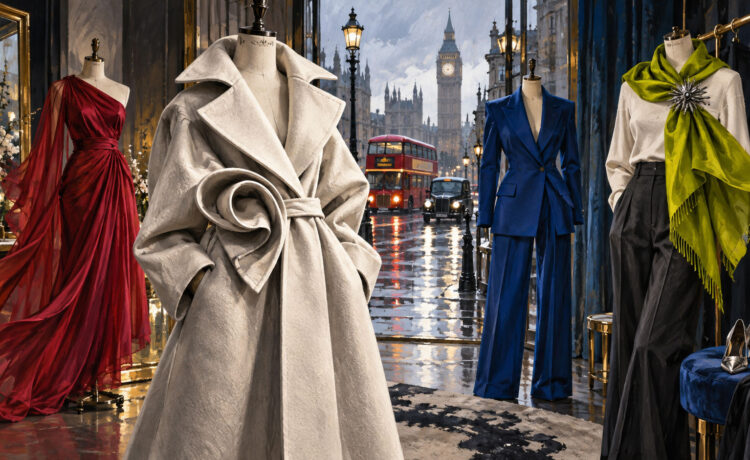
London Fashion Week’s spring/summer 2027 season made a persuasive case for fashion that wants to be worn and noticed at the same time. Vogue’s coverage points to a London scene emphasizing commercial viability without giving up creative personality, with established names and newer designers using tailoring, lingerie references, strong prints and flexible presentation formats to keep the city feeling distinct.
What happened
Vogue’s key takeaways from London Fashion Week highlight Christopher Kane’s debut for Mulberry, Seán McGirr’s return to McQueen, Burberry’s use of British cultural references and a wider emphasis on clothes that can move from runway spectacle into real wardrobes.
The British Fashion Council’s role and the industry’s economic importance also sit behind the shows. Vogue notes the scale of Britain’s fashion economy and the sector’s continuing effort to balance creative ambition with commercial reality.
Why it matters
Fashion weeks are often discussed as if they exist primarily to create images. The business side is harder to photograph but increasingly important. Designers need collections that can generate editorial excitement while also giving buyers clear products to sell.
London’s answer appears to be personality through construction rather than novelty for novelty’s sake. Tailoring can be oversized or playful. A cocktail dress can be commercially legible without being anonymous. Accessories can carry the strange idea while the rest of the outfit remains wearable.
That is a useful distinction from the old “quiet luxury” conversation. Wearability does not have to mean neutrality. A garment can be practical and still have a point of view.
That balance is particularly important in London, where fashion has historically benefited from a willingness to experiment. The commercial pressure does not erase that identity; it can actually force designers to make the idea clearer. A dramatic sleeve, a strange accessory or an unexpected fabric can provide the editorial hook while the underlying garment remains easy to understand. The result is fashion that photographs well without requiring the wearer to live inside a runway costume.
It also explains why accessories are doing more cultural work. A scarf, brooch or unusual shoe can carry a recognizable idea without requiring a complete wardrobe overhaul. That makes the runway-to-street translation faster, which is exactly what a fashion system built around constant visual circulation needs.
The result feels less like a retreat from experimentation than a practical way to keep experimentation alive.
The PopCultCanvas take
London’s strongest move this season may be refusing the idea that commercial fashion has to be visually timid. The city is leaning into clothes that can function in real life while still looking like somebody made a decision.
That is a good cultural signal for the rest of the season: personality is not necessarily the enemy of practicality. Sometimes it is the thing that makes practicality interesting.
Sources checked