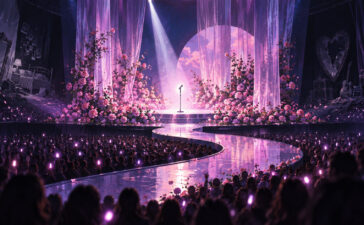
The deluxe album used to be the appendix. Taylor Swift has turned it into an encore. The Life of a Showgirl: The Encore arrived September 25 with four additional songs, giving an album released nearly a year earlier a new promotional cycle and a fresh reason to occupy the pop conversation.
What happened
Billboard reports that The Life of a Showgirl: The Encore adds four songs to the original 12-track album: “Patient Zero,” “Cleveland!,” “Pink Clouding” and “Babylon.” The expanded project arrived after Swift announced the new material earlier in the week.
The release has already generated measurable platform attention. Billboard reports that Spotify said Swift became its most-streamed female artist in a single day in 2026 following the release. That gives the deluxe project something beyond collector appeal: a demonstrable second wave of audience activity.
Why it matters
Deluxe editions have existed for decades, but streaming has changed what they mean. An extra song no longer sits at the back of a CD booklet; it can become the center of a new release week. The artist gets another cycle of playlists, videos, interviews, social conversation and fan interpretation without having to build an entirely new album.
Swift is particularly well positioned for this model because her fandom treats track lists, release details and visual changes as cultural material in their own right. The release becomes an object to analyze as well as a set of songs to hear.
There is a creative wrinkle, too. Swift originally presented The Life of a Showgirl as a deliberately contained 12-song project. Adding four songs later therefore changes how listeners think about the album’s boundaries. It is not simply “more tracks”; it revises the idea that the original sequence was the final shape.
The economics of the model are especially clear in an era when physical and streaming releases can coexist. A deluxe edition can serve collectors, casual listeners and playlist culture at the same time. It can also create a new visual campaign without abandoning the original album’s identity. In other words, the release is not really an “extra.” It is a controlled way to extend the shelf life of a cultural object.
It also illustrates why “album era” has become a broader term. The musical object, its artwork, its physical editions, its videos and its online conversation can all be refreshed without starting from zero. The encore is therefore both a creative extension and a piece of release strategy, which is increasingly difficult to separate in superstar pop.
The PopCultCanvas take
The interesting thing about The Encore is that it demonstrates how a major pop release can be reopened without being rebooted. The original album remains the anchor, but the new material gives the culture machine a reason to look again.
That is the deluxe edition’s modern job: not bonus content, but a second headline.
Sources checked