Anna Kendrick is moving behind the camera for The Seven Husbands of Evelyn Hugo, and that makes the project interesting before audiences even see a frame. The novel by Taylor Jenkins Reid has spent years occupying the modern bestseller-to-screen adaptation pipeline, and Kendrick’s involvement adds a second layer: a familiar actor becoming the director guiding one of publishing’s most anticipated Hollywood stories.
What happened
Kendrick discussed directing the film during the Zurich Film Festival, where she also spoke about her career and her earlier work in the Pitch Perfect series. The Hollywood Reporter and Variety both reported on her comments about taking on the adaptation.
The story centers on a reclusive fictional Hollywood star who decides to tell the truth about her life and marriages to a relatively unknown journalist. Its premise is built around old-Hollywood mythology, celebrity image-making and the gap between a public persona and a private history.
Why it matters
The project arrives at a moment when book adaptations are not merely supplying plots to studios; they are supplying built-in cultural conversations. Readers arrive with expectations about casting, tone and fidelity, while new viewers can discover the story through the film itself.
Kendrick’s position behind the camera makes the adaptation less straightforward than a conventional star vehicle. She understands performance from the actor’s side, but directing requires a different set of decisions about rhythm, framing, ensemble chemistry and what the audience is allowed to know at each moment.
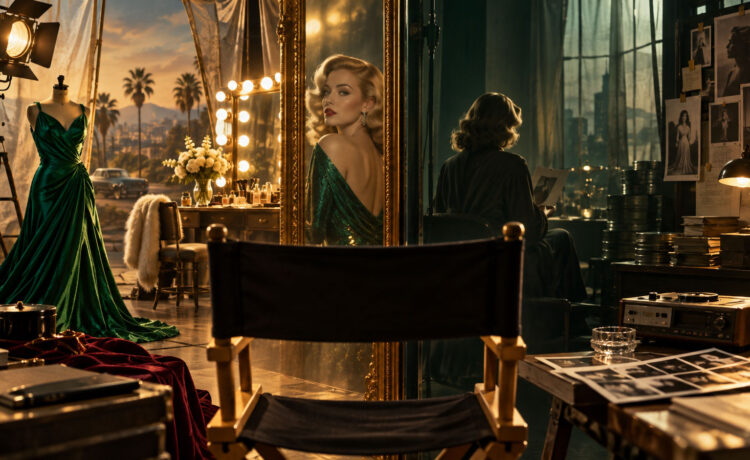
The material is also unusually sensitive to presentation. Evelyn Hugo is a fictional movie star whose life has already been mythologized inside the novel. The film therefore has to create a convincing version of Hollywood glamour while also making that glamour feel like part of the story rather than decoration.
There is also a business reason this kind of adaptation remains attractive. Publishers have already done a large part of the discovery work by building an audience around a book. Film studios then inherit a conversation that began before cameras rolled. The creative challenge is converting that existing enthusiasm into a movie that works for viewers who have never read the novel. Kendrick’s directing perspective will be part of that translation.
That translation is especially delicate because the novel’s appeal is partly its constructed mythology. The fictional star exists inside a world of studios, gossip, image control and carefully managed memories. A film adaptation has to make that world glamorous enough to draw viewers in while keeping enough emotional friction for the story to remain more than a period-piece fantasy.
The PopCultCanvas take
This is exactly the sort of adaptation worth watching as a piece of culture industry mechanics. A popular book provides the audience; a recognizable actor-director provides a new creative lens; and the eventual film has to satisfy people who have already imagined the story privately. That tension can make adaptation culture frustrating, but it can also make the best projects unusually rich.
Sources checked