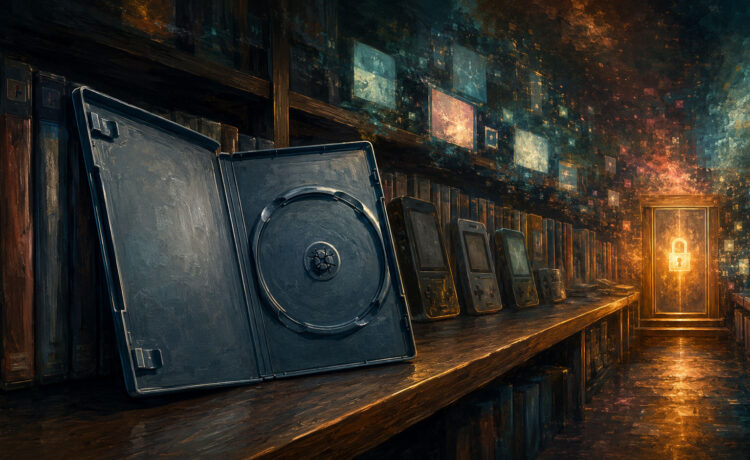
The digital ownership debate is usually easy to push into the “later” folder. Then a platform says the quiet part out loud, a legacy store starts winding down, and suddenly the future of your library feels less like convenience and more like a lease agreement with mood lighting.
What happened
The Verge reported July 1 that Sony’s move toward ending production of physical PlayStation discs in 2028 is landing alongside plans to wind down digital stores for older PlayStation platforms. The piece frames the announcements as a preservation issue, not just a retail-format shift.
That angle is important. The conversation is not only about whether players like discs. It is about resale, lending, collecting, archival access and what happens when a storefront becomes the only legal doorway to a game.
Why it matters
For years, digital libraries have offered obvious benefits: no shelf space, quick downloads, frequent sales and easier access across devices. But the tradeoff becomes clearer when older stores disappear or licensing changes remove content from circulation.
Games are especially vulnerable because they are tied to hardware, accounts, servers and platform rules. A movie can be reissued on another service. A game trapped on a dead storefront can become much harder to preserve.
The PopCultCanvas take
The PopCultCanvas take: the future can be convenient and fragile at the same time. That is the uncomfortable part. Digital gaming is not automatically bad, but it asks players to trust companies with both access and memory.
This is where the culture piece kicks in. A game library is not just software. It is childhood weekends, late-night co-op, speedrun history, fan art, YouTube essays and a thousand tiny personal timelines. When access narrows, culture narrows with it.
What to watch next
Watch for whether preservation groups, publishers and platform holders propose clearer long-term access plans. The next phase of the console conversation may be less about power and more about permanence.
The preservation problem also changes how players talk about value. A disc on a shelf is imperfect, but it is visible, lendable and emotionally concrete. A license in an account library feels effortless until the rules around that account change. That does not mean every player will abandon digital convenience. Most will not. But the more the industry moves away from physical media, the more it owes players a serious answer about access beyond the current console cycle.
Players can live with change, but they should not have to guess whether today’s convenient library becomes tomorrow’s locked room.
The debate will only get louder as more blockbuster releases treat the box as optional and the account as the real shelf.
That uncertainty is exactly what turns a technical policy story into a culture story about memory, access and trust.
Sources checked