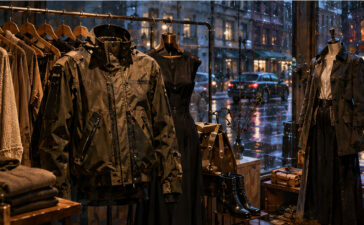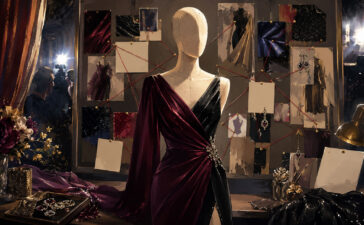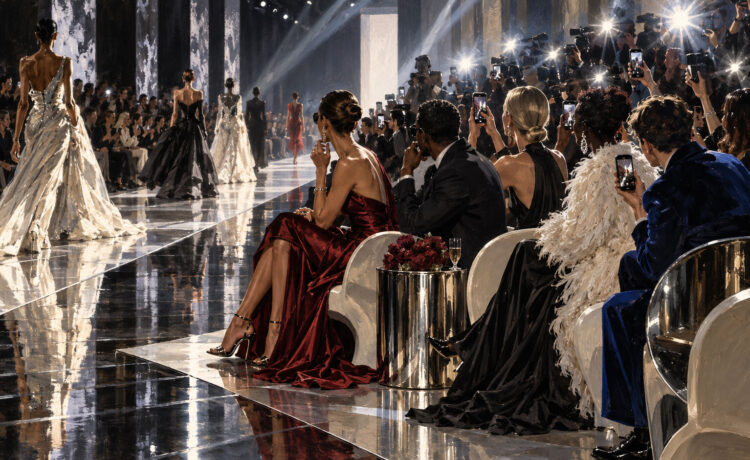
The runway is still the runway. But during Fashion Month, the front row has become something else: a portable content set. New York and London Fashion Week coverage increasingly treats celebrity arrivals, outfits and reactions as their own cultural programming, running parallel to the collections themselves. The result is a fashion ecosystem where the clothes on the runway and the people watching them are both part of the show.
What happened
September’s Fashion Month has produced a steady stream of celebrity appearances across New York and London. Vogue’s London Fashion Week coverage notes a front row populated by cultural figures alongside designers and industry insiders, while People and other entertainment outlets have documented celebrity appearances across fashion events.
The important part is not any single guest. It is the format. A fashion-show invitation now creates several layers of content: the runway, the arrival, the outfit breakdown, the seating chart, the backstage moment and the social reaction.
Why it matters
Fashion has always used celebrity association to translate runway ideas into popular culture. Social platforms have simply made that translation immediate. A designer’s collection can be photographed professionally, while a celebrity’s front-row outfit can be posted, reposted, analyzed and shopped within minutes.
This creates a feedback loop. Brands invite people who can generate attention. Those people arrive wearing clothes that can generate another story. The story sends attention back to the brand. Suddenly the “audience” is also part of the media plan.
It is also why front-row culture can feel more important than the traditional fashion-show hierarchy suggests. A collection may be designed for buyers and editors, but the celebrity image is often what travels furthest beyond the room.
For fashion brands, the advantage is obvious: one invitation can generate several pieces of content without changing the collection itself. For audiences, it creates a second layer of fashion literacy. People may first see a collection through a celebrity wearing one piece, then encounter the runway version later, then see the item interpreted by creators. The front row has therefore become part of the distribution system, not simply a place where important people sit.
It also creates a peculiar hierarchy of visibility. The most photographed person at a show is not necessarily the person whose collection is strongest, and the most discussed outfit may not come from the runway at all. Fashion Week has always mixed commerce, celebrity and media; social distribution has simply made the mixture impossible to separate.
The PopCultCanvas take
The front row is basically fashion’s second stage, except nobody has to build it. Put a few famous people in good lighting, add a camera line and a runway behind them, and the event produces two visual stories at once.
That is not necessarily bad for fashion. It does, however, mean that the modern fashion week is less a show than a content ecosystem with excellent tailoring.
Sources checked