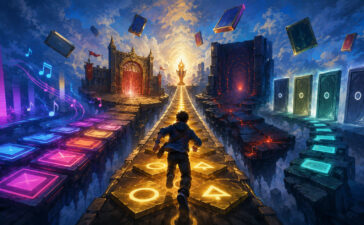
Final Fantasy VII nostalgia has never been simple nostalgia. It is memory, debate, canon, remix and emotional archaeology all wrapped in one enormous sword-shaped shadow. Final Fantasy VII Revelation, now officially titled, gives that long-running remake conversation a new destination: spring 2027.
What happened
Square Enix announced Final Fantasy VII Revelation as the third and final entry in the remake trilogy, with a spring 2027 simultaneous release planned for PlayStation 5, Nintendo Switch 2, Xbox Series X/S and PC. The Verge’s Summer Game Fest coverage highlighted the reveal and noted gameplay elements including the Highwind airship, an expanded world, playable Vincent Valentine and Cid Highwind, and the return of major original-game locations.
Why it matters
That matters because the remake trilogy has become more than a visual update of a classic JRPG. It is a cultural argument about how much a beloved story can change while still being itself. A simultaneous multi-platform release also changes the conversation. Instead of staggered fandom waves, Revelation is positioned to arrive as one big cross-platform event. That is smart for spoilers, discourse and global momentum.
The PopCultCanvas take
The PopCultCanvas take: Revelation’s job is huge. It has to satisfy original fans, remake-era fans, lore detectives and players who simply want the emotional payoff after years of investment. The title itself is doing a lot of work. It promises answers, endings and maybe a few new arguments for the group chat. With Final Fantasy VII, closure is never just closure; it is a fandom sport.
The gaming read is bigger than any single trailer. Showcase season now functions like a culture stock exchange: release windows rise and fall, platform confidence gets repriced, and fandoms decide which promises they believe. Players are not just reacting to games anymore; they are reacting to roadmaps, exclusivity signals, development timelines and the feeling that a company knows what it is good at.
The gaming read is bigger than any single trailer. Showcase season now functions like a culture stock exchange: release windows rise and fall, platform confidence gets repriced, and fandoms decide which promises they believe. Players are not just reacting to games anymore; they are reacting to roadmaps, exclusivity signals, development timelines and the feeling that a company knows what it is good at.
For Square Enix, that means the marketing cannot only sell scale. It has to sell confidence. The final chapter needs to look grand, but it also needs to suggest that the trilogy’s strange, ambitious structure was leading somewhere on purpose.
What to watch next
Watch how Square Enix handles the next information drops. The more specific the footage gets, the more the debate will shift from “what is this trilogy doing?” to “can it land the plane?”
Sources checked