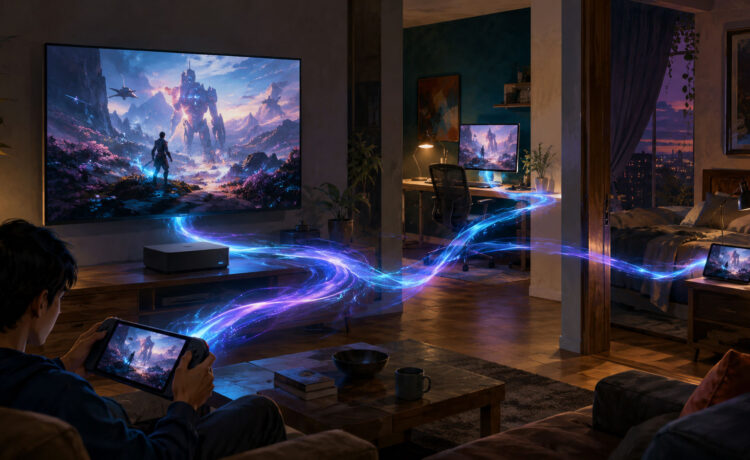
The next console war may not be fought entirely under the television. Sony’s latest comments about the future of PlayStation point toward a gaming world where the living room is still important, but no longer the only throne. The box matters. The screen you choose may matter more.
What happened
The Verge reported that Sony, in investor Q&A comments, described future PlayStation experiences as moving “beyond the living room,” with attention to changing play styles, personal monitors, Remote Play and devices like the PlayStation Portal. The same report notes that Sony is thinking carefully about pricing and value, rather than returning to the old model of heavily subsidizing hardware.
This follows a wider June gaming season in which PlayStation, Xbox and Nintendo have all been under pressure to explain why their ecosystems still deserve expensive hardware commitments. The Verge’s Summer Game Fest coverage framed Sony’s showcase period as a chance to reassert a clearer identity after live-service stumbles and rising console costs.
Why it matters
For decades, the console pitch was simple: buy the box, plug it into the best TV in the house, play the exclusives. That model is still alive, but it no longer describes how everyone plays. Some players use monitors. Some stream from another room. Some want handheld convenience. Some bounce between console, PC and cloud saves without much interest in brand purity.
Sony’s challenge is to preserve the premium PlayStation identity while acknowledging that the single-screen living-room ritual is no longer universal. The more gaming becomes flexible, the more the “console” becomes an ecosystem rather than a plastic object.
The PopCultCanvas take
The phrase “beyond the living room” sounds corporate, but the cultural shift underneath it is real. People do not just watch differently now; they play differently. The same household can have a TV gamer, a handheld gamer, a laptop gamer and a phone-scroller, sometimes all in the same person depending on the hour.
Sony’s advantage is still its association with polished, cinematic, premium games. Its risk is pricing that premium so high that flexibility feels like a luxury layer instead of a practical evolution. If the next PlayStation wants to feel future-facing, it cannot simply be stronger. It has to feel easier to live with.
That matters because hardware loyalty is less automatic than it used to be. A player may love PlayStation franchises while also expecting the convenience they get from phones, tablets and handheld PCs. The next generation has to win that daily-use argument, not only the spec-sheet comparison.
What to watch next
The next big signal will be whether Sony’s hardware strategy brings handheld-style play closer to the center, or keeps it as an accessory orbiting the main console. The living room is not dead. It just has competition inside the same house.
Sources checked