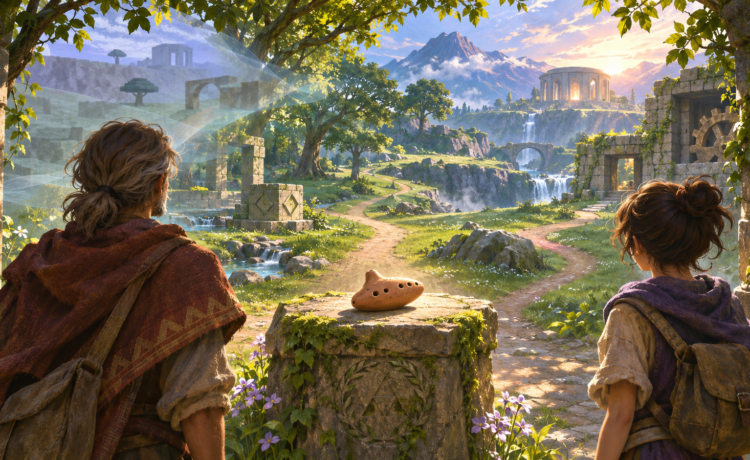
A remake has to negotiate with two audiences: people who remember a game and people who have only heard how much it matters. Nintendo’s new Ocarina of Time for Switch 2, launching November 5, arrives directly between them. The interesting test is whether the adventure can create a fresh experience while carrying the weight of an unusually cherished one.
What happened
Nintendo published a new Ask the Developer interview on November 2, introducing the team behind the Switch 2 exclusive. Its opening discussion returns to the original game’s move into three-dimensional adventure and the design decisions that helped players navigate that space. The interview puts creative reasoning alongside the release-week promotion.
Nintendo’s October overview outlines a rebuilt presentation with new gameplay elements. Among the announced additions are microphone interaction with learned ocarina melodies, fully voiced cutscenes and a place called the Hall of Fallen Heroes for encounters with defeated monsters. Those are announced features; their value in everyday play still has to be assessed when the game arrives.
Why it matters
A game remembered as seamless may have become seamless partly because its players learned it so thoroughly. A newcomer starts without that accumulated knowledge. Returning players may want familiar geography and timing; new players need the game to explain itself through play. A remake can expose the gap between those two experiences.
That makes developer discussion especially useful. Better-looking scenery is easy to notice in a trailer. Choices about navigation, feedback and pacing are easier to appreciate when someone explains the problem they were trying to solve. Understanding the intention gives players a sharper question to bring to the finished work.
The PopCultCanvas take
We would judge this return by the quality of its curiosity. Does a path make you want to follow it? Does a puzzle let you form a useful idea before supplying an answer? Does a place feel connected to the adventure around it? A memory can tell us that something once worked; a new playthrough tells us how it works now.
The microphone feature is an appealing example of an addition that needs to earn its place through use. It could make music feel more physically present. The practical question is whether it remains enjoyable after the first demonstration. A clever interaction becomes meaningful when it supports the rhythm of play, rather than repeatedly interrupting it.
Voice performances introduce a different possibility. A voice can give a scene immediacy, while also narrowing the voice a returning player had supplied in their imagination. That tension is part of adapting a beloved work. The goal is a convincing new interpretation with enough confidence to be experienced on its own terms.
For first-time players, the healthiest invitation is simply to explore. No one should have to pass a nostalgia exam before entering a game.
What to watch next
The announced launch is November 5 on Nintendo Switch 2. Look for hands-on assessments of controls, accessibility and the flow of the new features. Returning players can bring their memories; newcomers should feel free to bring only their curiosity. Both deserve an adventure that makes sense in their hands.