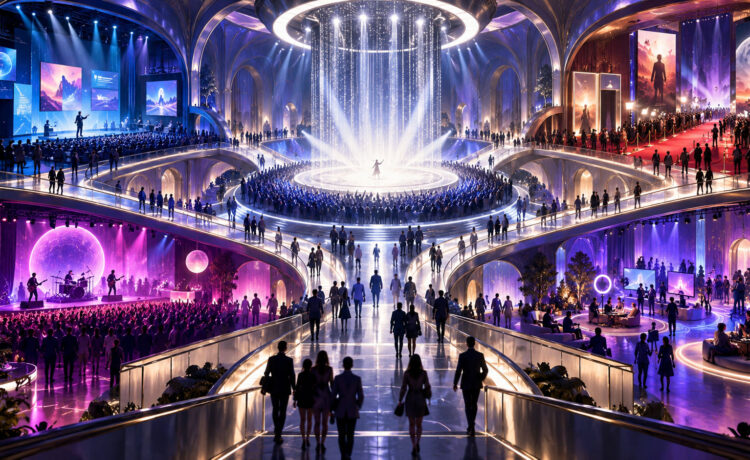
Fall used to arrive with a recognizable rhythm: television returned, movie season accelerated, music releases stacked up, and holiday culture waited its turn. In 2026, that sequence has become much less orderly. Nearly every release wants an opening moment, a reaction cycle and a reason to remain visible after the first weekend.
What happened
New York Comic Con is a useful example. Variety’s reporting on the convention’s 20th anniversary shows how a fan gathering now functions as a launch platform as much as a meeting place. Prime Video used the event for Blade Runner 2099 material, while streaming services continue to build October schedules around recognizable seasonal identities. Even theatrical movies are arriving with built-in conversation hooks.
The current calendar is therefore less about release dates than about launch sequences. A project can move from announcement to trailer to panel to social clips to interviews and then into a theatrical or streaming debut. Each stage keeps the title alive without requiring the same audience to consume every piece.
Why it matters
The eventification of entertainment matters because audiences increasingly experience releases as participatory objects. A movie can have a trailer, a convention panel, a creator challenge, a reaction ecosystem and a streaming date. These pieces do not have to be the same content; they simply have to point back to the same cultural object.
That is useful for franchises because fandom thrives on accumulation. One piece of news creates another thing to discuss, which creates another opportunity for clips and commentary. It also explains why smaller projects are trying to establish recognizable identities early. If a title can create a visual world, memorable premise or audience ritual, it can compete for attention before the traditional marketing campaign peaks.
The risk is saturation. If every release is presented as a major moment, audiences eventually stop distinguishing between a genuine cultural event and ordinary promotional noise. The calendar becomes louder without necessarily becoming more meaningful.
This is also why release calendars increasingly resemble programming schedules. A company is not only deciding when something becomes available; it is deciding when the audience should notice, when creators should discuss it and when the next piece of information should arrive. The result is a chain of small events rather than one opening-night splash.
There is a creative upside to that structure. A well-designed rollout can give audiences multiple entry points without asking everyone to consume the same material. The danger is that the industry can mistake activity for enthusiasm. A crowded timeline is not necessarily an engaged audience, which is why the strongest campaigns still need a memorable idea at their center.
The PopCultCanvas take
The strongest campaigns are becoming more specific. They do not merely say that something is big. They give people something to do: attend, debate, dress up, make a clip, share a theory or bring a friend into the fandom.
That is a better proposition than simply increasing advertising volume. Participation creates memory. It gives an audience a reason to feel that it was there for something, even if “there” means watching a trailer at home and joining the conversation five minutes later.
What to watch next
Watch November and December. The holiday calendar is crowded, and the projects that break through will likely be the ones that create a distinct event around themselves rather than simply buying more promotional space.
Sources checked