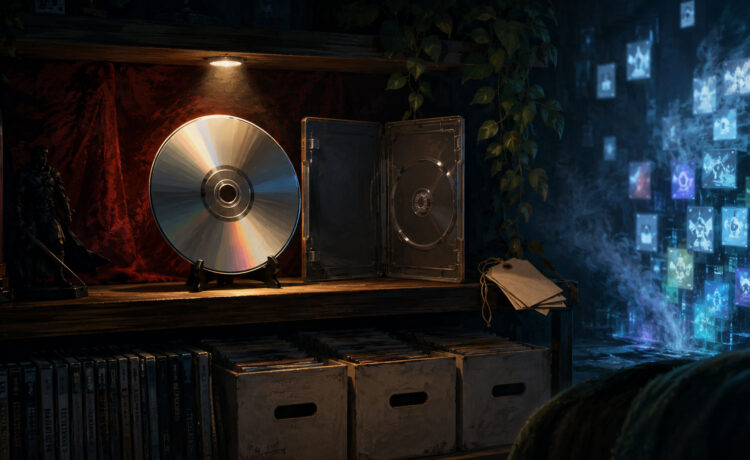
The disc is starting to look less like the default way to own a game and more like a statement piece. That does not mean physical media is dead tomorrow. It means gaming is entering the same emotional zone that music entered with vinyl: part format, part ritual, part ownership anxiety, part collector identity.
What happened
The Verge recently argued that the future of physical games is looking rough, pointing to shifts around digital releases and Sony’s move away from making physical discs for new PlayStation games starting in 2028. A related Verge analysis framed Sony’s future PlayStation hints around a more digital, possibly handheld-forward business. Another recent gaming report noted Bethesda teasing Fallout 5 after Xbox’s mass-layoff context, a reminder that the business environment around big games is anything but calm.
Why it matters
This matters because ownership is one of gaming’s oldest emotional contracts. A disc on a shelf signals permanence, lending, resale, display and a small amount of control. Digital storefronts offer convenience, portability and instant access, but they also remind players that access can be shaped by accounts, stores, licenses and platform decisions. When companies talk about “true digital platforms,” players hear possibility and warning at the same time.
The PopCultCanvas take
The PopCultCanvas take: physical games are becoming culturally louder as they become commercially less central. That is exactly how formats become nostalgic before they fully disappear. Collectors will defend the shelf. Younger players may shrug because their libraries have always lived behind login screens. Publishers will chase margin and logistics. The result is not a clean format war; it is a messy argument about what buying a game is supposed to mean.
There is also a preservation angle hiding under the consumer argument. Physical media is not a perfect archive, but it gives players and collectors another path when stores change, licenses expire or servers disappear. Digital libraries can be wonderfully convenient and still feel fragile. That tension is why the debate keeps returning with real heat. The question is not whether discs are more efficient. They usually are not. The question is whether efficiency alone is the culture we want around games that people love, replay and pass down.
What to watch next
Watch how retailers, collectors’ editions and indie publishers respond over the next two years. If mainstream physical releases shrink, limited runs may become more symbolic, more expensive and more culturally charged. The humble disc may end up less common but more emotionally loaded.
For players, the debate becomes personal fast because libraries are emotional histories. A backlog is not only software; it is birthdays, trade-ins, midnight launches, borrowed copies and saves that outlast whole console generations. Format changes touch those memories even when the business logic is obvious.
Sources checked
The Verge on physical games; The Verge on PlayStation’s future; The Verge Bethesda report.