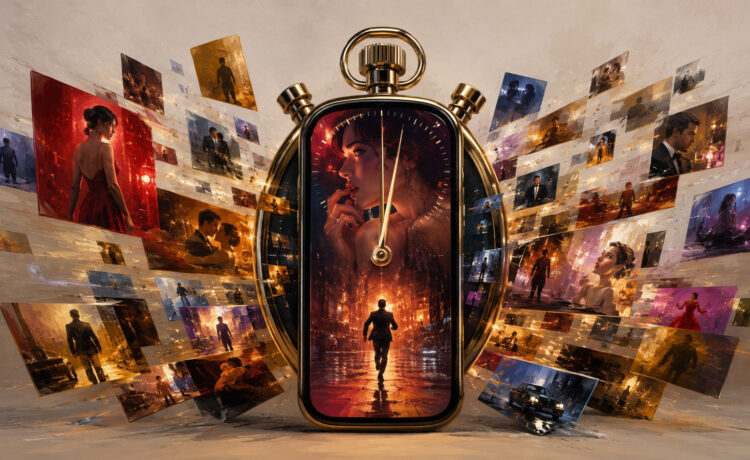
The tea is no longer just spilled. It is edited into a vertical cliffhanger, served in 90 seconds and followed by a button begging you to keep watching. Hollywood’s microdrama boom sounds like a niche format until you realize it is basically the internet’s favorite behavior — urgent narrative — turned into a business model.
What happened
AP reported that Hollywood is increasingly embracing microdramas, the short, mobile-first storytelling format built around brief episodes and fast hooks. The piece points to studios, stars and creators experimenting with the model as vertically shot fiction becomes a more serious entertainment lane.
The Verge’s coverage of Instagram’s smart-TV push gives the trend another layer. As Instagram experiments with Reels, Stories and longer creator viewing on connected TVs, the industry is testing whether phone-native storytelling can move between screens without losing its addictive rhythm.
Why it matters
Microdramas are not just short TV. They are built around a different emotional contract. Traditional episodes ask for time. Microdramas ask for momentum. The format thrives on immediate stakes, quick reversals, heightened feelings and the kind of “wait, what?” pacing that already powers comment sections and group chats.
That makes the format especially interesting for gossip-adjacent culture. Not gossip in the invasive sense, but gossip as structure: secrets, reveals, alliances, betrayals, receipts, cliffhangers. The audience is trained to chase the next piece of information. Microdrama simply formalizes that chase.
The PopCultCanvas take
The funniest thing about microdramas is that Hollywood spent years chasing cinematic scale, then rediscovered the power of a tiny screen and a messy reveal. The format is not automatically lowbrow. Some of the best storytelling has always been compact. But the speed can flatten character if the only goal is the next twist.
The opportunity is sharper than the skepticism suggests. A great microdrama could be a modern soap, a creator-native thriller, a comedy sketch with continuity or a serialized romance that fits into transit time. The danger is that platforms reward the loudest hook over the best story, turning every scene into a cliff edge with no room to breathe.
That is why the Tea Room angle fits. Microdramas understand that people love narrative acceleration: a clue, a reaction, a confrontation, a new piece of context. The format turns that impulse into pacing. It is not gossip about real people; it is gossip logic applied to fiction, with the snackable urgency of a group chat recap and the polish of a studio experiment.
What to watch next
Watch whether microdramas create recognizable stars and durable formats, not just impressive first-week view counts. When viewers remember characters instead of only twists, the format becomes more than a stopwatch trick.
Sources checked