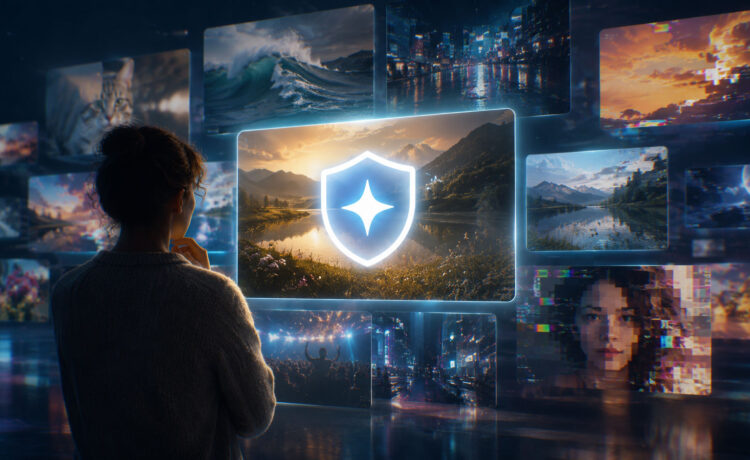
The internet’s old advice was “don’t believe everything you see online.” The 2026 update is less catchy but more accurate: platforms now have to help you decide what kind of thing you are seeing before your brain has already filed it as real. YouTube’s more visible AI labels are not glamorous, but they are exactly the kind of boring trust infrastructure the feed suddenly needs.
What happened
YouTube has been expanding how it labels realistic AI-generated or significantly altered content. In a May update, the company said it was moving AI disclosures into places viewers would actually notice, including below regular videos and as an overlay on Shorts. YouTube also said it was rolling out internal signals to help identify photorealistic AI use when creators do not disclose it themselves.
The company’s broader 2026 creator roadmap also includes AI tools for Shorts and other formats, including likeness-related features and creator controls. That pairing is the tension: YouTube is building the tools that make synthetic media easier to create while also building the labels that help viewers understand what they are looking at.
Why it matters
AI labeling is not just a policy feature. It is becoming part of the culture of watching. If viewers cannot quickly tell whether a clip is real, altered, synthetic, satirical or promotional, the platform experience gets muddy fast. That is especially true on Shorts, where context is already thin and the next video arrives before skepticism has time to stretch.
For creators, clearer labeling cuts both ways. Responsible AI use can be normalized when it is disclosed cleanly. But automatic detection also means creators may have less room to treat disclosure as optional. The platform is moving from asking for honesty to building systems that verify it.
The PopCultCanvas take
The “trust sticker” era is not going to be elegant. Some labels will feel obvious. Some will be contested. Some viewers will ignore them entirely. But the alternative is worse: a feed where every realistic image or video carries a tiny invisible question mark.
YouTube’s challenge is that labels cannot be decorative. They need to be readable, consistent and actually useful in the split second before a viewer shares something. A disclosure hidden in a description is basically a museum plaque in a nightclub. A visible label, even imperfect, at least enters the room.
What to watch next
Watch whether other platforms follow with more visible labels rather than vague disclosure menus. The next phase of internet culture may be less about who has the best AI tools and more about who makes synthetic content feel least slippery.
For viewers, the best-case result is not paranoia. It is context: enough information to watch creatively without treating every clip like a forensic assignment.
Sources checked