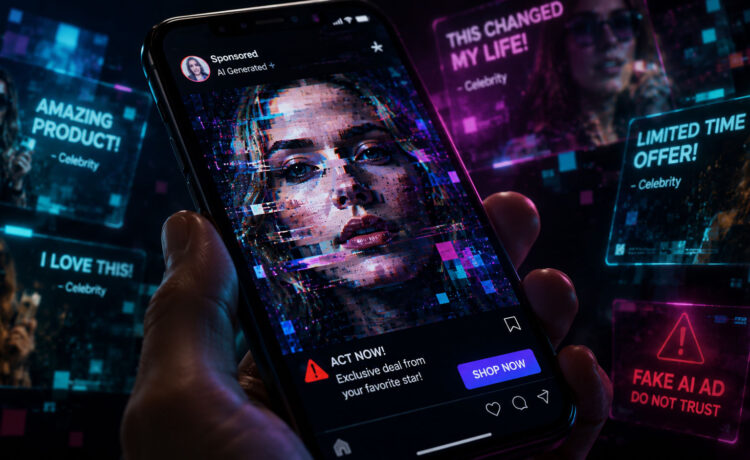
The social feed used to ask one main question: do you like this? Now it asks a second one before you even get there: is this real? AI celebrity ads and synthetic influencer content are making that question harder to answer, especially when labels are inconsistent or missing.
What happened
The Verge reported that scammers have used AI-generated celebrity videos, including fake versions of Taylor Swift and Rihanna, to promote shady services on TikTok and collect personal data. In a separate piece, The Verge also covered the broader problem of AI-generated ads appearing without clear labels, even when the content looks visibly synthetic.
YouTube has been building a different kind of response. The Verge reported that YouTube’s likeness detection program is expanding to Hollywood, allowing enrolled public figures to find AI deepfake content and request removals under the platform’s privacy process.
Why it matters
The problem is bigger than one fake ad. Celebrity likeness has always been valuable, but AI lowers the cost of faking endorsement. That creates a dangerous middle zone where a video can look familiar enough to earn trust but synthetic enough that nobody is actually accountable.
For regular users, the feed becomes cognitive labour. Every ad, clip and endorsement now requires a small verification process. Is it labeled? Is it from the celebrity’s official account? Does the voice sound strange? Does the product seem suspicious? That is a lot to ask from someone who just opened an app while waiting for the kettle.
The PopCultCanvas take
The most exhausting part of the AI ad era is not that bad content exists. Bad content has always existed. The exhausting part is that platforms are making users become unpaid authenticity inspectors.
If a brand uses AI, label it clearly. If a platform allows ads, enforce disclosure properly. If a scam uses a fake celebrity, remove it quickly. None of this should depend on users squinting at a suspicious jawline or deciding whether a smile has too many teeth.
What to watch next
Watch whether likeness detection becomes a standard feature for public figures and creators. Also watch regulators, because advertising has different expectations from casual posting. Once synthetic endorsements start moving money and personal data, the “just content” excuse gets thin fast.
Sources checked: The Verge — celebrity deepfake ads, The Verge — AI ad labels, The Verge — YouTube likeness detection