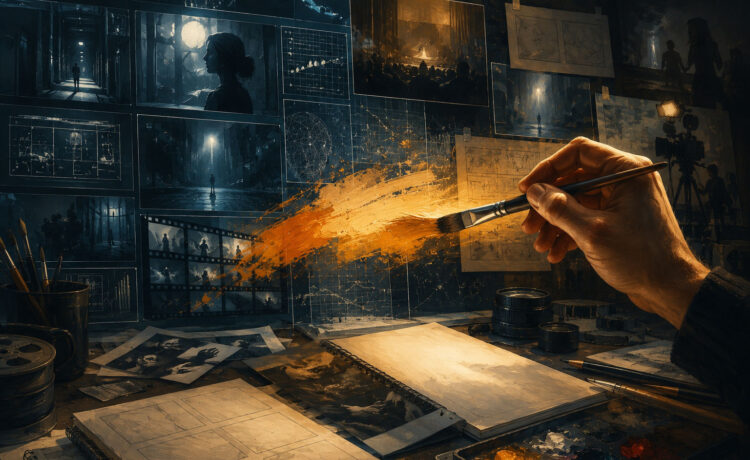
Pop culture has spent years treating AI like a magic trick: impressive, unsettling, and just flashy enough to distract from the awkward questions underneath. But this summer, the conversation is shifting from “Can AI make something?” to “What should count as human creative work?” That is a much more interesting fight.
What happened
Reuters reported that the Academy of Motion Picture Arts and Sciences updated its rules to clarify that acting and writing eligible for Oscar consideration must be performed by humans, not artificial intelligence. The changes apply to the next Oscars ceremony and arrive after years of anxiety about generative AI in Hollywood, especially around performance, screenwriting, voice, likeness and ownership.
That decision lands in the same cultural moment as Cannes Lions, where Business Insider reported that industry leaders were pushing back against last year’s breathless AI hype and making the case for creativity, judgment and taste. The festival conversation did not reject AI entirely. Instead, it reframed AI as a tool that needs human direction, not a replacement for the messy, specific and often irrational work that makes culture memorable.
Creators were also central at Cannes, with the festival’s LIONS Creators program putting digital creators into the official conversation. That matters because the creator economy has become a test lab for the same question Hollywood is asking: when tools get faster and cheaper, what makes a voice feel real?
Why it matters
The Academy’s rule is more than awards housekeeping. Awards are symbolic machines. They tell industries what to value. By drawing a line around human acting and writing, the Oscars are saying that creative labour is not just the final output. It is the choices, risks, timing, taste, lived experience and performance behind the work.
This is not anti-technology. Filmmaking has always used tools, from editing software to visual effects to digital cameras. The difference with generative AI is that it can imitate the surface of creative work while blurring who made what, who consented, and who gets credit. That is why the conversation feels bigger than one rulebook.
For audiences, the stakes are trust. People do not only want polished content. They want to know why something exists, who made it, and whether there is a person behind the point of view. In a world of synthetic everything, authorship becomes part of the experience.
The PopCultCanvas take
The next culture flex may be obvious human fingerprints. Weirdness. Imperfection. Specificity. The joke that feels too odd to be focus-grouped. The performance choice that makes no algorithmic sense but somehow works. The visual detail that reveals someone actually cared.
AI will absolutely remain part of entertainment. It will help storyboard, research, edit, translate, pitch, test and probably make a million things nobody asked for. But the work that breaks through will still need a reason to exist beyond “the tool could do it.”
The Oscars putting humans back at the center is not the end of the AI debate. It is the beginning of a clearer one. The question is no longer whether AI can participate in culture. It already does. The question is whether culture is brave enough to keep valuing the people who give it meaning.
What to watch next
Watch how studios, streamers and festivals handle AI disclosure. Also watch creators: they may become the clearest example of how human taste survives automation. The more content becomes synthetic, the more valuable a trusted point of view becomes.
Sources checked: Reuters, Business Insider, Cannes Lions